Toolkit for establishing and running an effective exchange of information function

03/22/2021 The toolkit provides jurisdictions with practical guidance in establishing and running their Exchang of Information (EOI) function. It is based on best practices identified, especially during the Global Forum’s peer reviews. It is therefore not prescriptive, but rather provides indications on the possible approaches, based on internationally accepted best practices. The EOI unit plays a central role in the operation of EOI and more broadly in international tax co‑operation. Jointly published by the Global Forum Secretariat and the African Tax Administration Forum, the toolkit is aimed at assisting countries in establishing or improving their EOI units’ operation. It underlines policy considerations and provides guidance on setting up and managing an effective EOI function in order to improve co-operation among tax administrations and better tackle tax evasion and other illicit financial flows. The toolkit is not an end in itself. It provides practical answers to the frequent questions asked by jurisdictions along the EOI journey. Visit the Global Forum’s website to download the toolkit in English, French, or Spanish For further information: Find out more about ATAF

Toolkit for establishing and running an effective exchange of information function Read More »

Tackling the challenges faced by tax administrations during and after the Covid-19 pandemic!

04/22/2021 NTO “Tax & Covid-19 peer-learning webinar on rethinking communication strategies and relations between tax authorities and tax payers” Programme The Covid-19 pandemic has placed unprecedented spending pressure on the fiscus of most governments. Countries worldwide face the challenge of safeguarding revenue to finance Covid-19 response measures. Peer-learning and the exchange of good practices on the implementation of innovative tools, solutions and approaches are crucial to tackling the challenges faced by tax administrations during and after the Covid-19 pandemic. Digital tools and updated communication strategies as tools to tackle the crisis Countries worldwide take on tax policy and administrative measures to address the Covid-19 crisis and its economic consequences. In this context, the adjusting of processes and the enhancing of communication strategies and tools, to ensure that taxpayers are well informed, has become more relevant than ever before. Due to the nature of the long-term challenges brought on by the pandemic, the use of digital tools and enhanced communication strategies are identified as effective solutions in the response to the Covid-19 crisis. To limit the spread of the virus while still pursuing revenue mobilisation targets, it is generally recommended that revenue authorities look to minimise personal contact between taxpayers and staff at tax administrations and maintain communication with taxpayers. This includes the strengthening of contactless procedures and promoting contactless taxpayer services (such as e-registration, e-filing and e-payment). Additionally, communication with taxpayers needs to be enhanced through bolstering electronic, online, and other remote platforms (such as websites, virtual assistance, specific mobile applications and call-centres). As added benefit, such measures are also much more convenient while simultaneously reducing the cost of paying taxes for taxpayers. Peer-learning and sharing good practices Tax administrations benefit immensely of the sharing of experiences and lessons learnt during these challenging times. On 29 April 2021, the Network of Tax Organisations (NTO) and the Exchange and Research Centre for Leaders of Tax Administrations, CREDAF, are holding a webinar on “Rethinking communication strategies and relations between tax authorities and taxpayers” to discuss the ways tax administrations can communicate effectively with tax payers and explore approaches used for revenue mobilisation and taxpayer education. During the webinar, representatives from tax authorities of Mali, the United Kingdom and Canada will share their approaches on communication strategies and citizens’ services. For more information, please have a look at the programme. In case of questions, please contact secretariat@taxcompact.net or your respective tax organisation.

Tackling the challenges faced by tax administrations during and after the Covid-19 pandemic! Read More »

CIAT presents the Digital Economy Compliance Tool

09/29/2021 The tool can be customised according to the necessities of each tax administration and implemented by other ATI members when required. The digitalisation of the economy has raised many challenges for taxation. While the global trend of online commerce and international trade of services and intangibles consolidates, national governments in developing countries struggle to mobilise resources to finance their development goals. Tax administrations face the challenge of adapting their operative systems to collect revenues from cross-border transactions and new business models. To address this challenge and harness the revenue potential of digital transactions, the Inter-American Center of Tax Administrations (CIAT), with the support from the Norwegian Agency for Development Cooperation (Norad), has developed the Digital Economy Compliance Tool (DEC). In an insightful webinar, CIAT presented the DEC tool and explained how other ATI members can profit from it. The DEC tool offers a simplified voluntary mechanism for registration, declaration, payment and communication of companies operating without a physical presence in a country. In his introductory remarks, the Director of Cooperation and International Taxation at CIAT, Mr. Isaac Gonzalo Arias Esteban, stated that the tool has a global potential because it is open source and completely parametrisable. The tool can contribute to expedite the collection of VAT, allowing countries to apply the destination principle in cross-border transactions, and ultimately fostering fair competition in international trade. Against this background, Mr. Eduardo Jiménez, advisor in the Consumption Taxes Unit, Centre for Tax Policy and Administration at the OECD, presented the OECD recommendations on indirect taxation of digital economy transactions. The recommendations have four core pillars (i) the creation of an effective legal basis for a right to tax inbound international online sales; (ii) the implementation of an efficient and effective collection mechanism; (iii) the leverage of the potentials of existing digital platforms to enhance VAT collection and; (iv) the facilitation of compliance and strengthening of enforcement through modern, data-driven risk management and administrative cooperation. Mr. Jiménez brought attention to the publication of the first VAT digital toolkit, which has a regional focus on Latin America and the Caribbean. To showcase the revenue potential that e-commerce has, Mr. Santiago Díaz de Sarralde, director of Tax Studies and Research at CIAT, presented empirical evidence on the levels of VAT collection that could be levied through effective taxation of digital services. Taking a sample of eight Latin American countries, it is estimated that yearly additional revenues could amount to USD 255 million in total, which represents between 0.03% and 0.06% percentage points of the national GDPs  in the selected countries. The areas with the highest revenue potentials are the digital advertising and the audio-visual production, respectively. Next, Mr. Raúl Zambrano, Technical Assistance and Information Technology and Communication director at CIAT, presented the DEC Tool, a software-based solution that aims to facilitate the collection of VAT for transactions taking place virtually. The tool has two interfaces: one for the tax administration and one for the taxpayer, and it can be adapted to any language. Mr. Zambrano explained how to utilise the multiple functions of the DEC tool, such as registering new taxpayers, filling return requests, uploading documents and paying obligations. Since the tool can be customised and adapted to the necessities of any tax administration, there are countless additional options to collect information and optimise processes. In terms of security, the DEC Tool fulfils the highest security standards and can be operated on-prem (within the tax administration’s internal system and hardware) or as cloud-based solution (via internet). To conclude, Mr. Simen Bjørnerud, Policy Advisor at Norad and representative of ATI Consultative Group 1, pointed out the importance of improving fair and effective VAT collection, as it represents the most important revenue source for developing countries. Furthermore, he celebrated the increasing cooperation among CIAT and the OECD in the last years to address relevant challenges for the taxation of the digitalised economy. Mr. Bjørnerud emphasised the potential of the DEC tool to foster domestic revenue mobilisation, particularly in the Least Developing Countries (LDCs), and emphasised that the ATI will continue fostering the exchange of experiences and peer learning among members on the topic. To know more about the DEC implementation process, interested tax administrations can access the DEC handbook and contact CIAT’s project manager, Mr. Décio Carreta (dcarreta@ciat.org).

CIAT presents the Digital Economy Compliance Tool Read More »

Why is building stronger partnerships to fight tax-related illicit financial flows a topic for the 1st NTO Technical Conference?

10/15/2021 Fighting tax evasion and avoidance effectively comes down to cooperation and partnerships – both on domestic and international level. Tax evasion and avoidance are illicit financial flows and represent as such serious impediments to achieving sustainable development, eradicating poverty and reducing inequality. Although it is methodically difficult to fully measure the forgone revenue, it is clear that the amounts lost to tax evasion and avoidance are significant. So significant, that they endanger the achievement of the sustainable development goals as governments lack necessary domestic resources. As most recently shown by the Pandora Papers leaks, multinational companies and wealthy individuals go all too often under- or even untaxed and keep accumulating their wealth. In the meantime, governments across the world struggle to finance and provide sufficient public goods and services, like health care, infrastructure or energy. Hence, the road to achieving sustainable development, eradicating absolute poverty and reducing inequality remains bumpy. Against this backdrop, the fight against illicit financial flows is a crucial part of domestic resource mobilisation. The key ingredients are increased transparency about key financial data and cross-border flows, company structures and beneficial ownership information. Having access to such information will help tax administrations to identify as well as prevent tax evasion and avoidance. However, gaining access to this kind of information is not always easy as information is often well-hidden and several sources need to be consulted to collect all necessary data. This complexity is increased in cross-border contexts. Consequently, fighting tax evasion and avoidance effectively comes down to cooperation and partnerships – both on domestic and international level. Due to the complexity and cross-border nature of such schemes, this endeavour cannot be undertaken in domestic isolation. Relevant pieces of information, which are necessary to detect tax crimes and tax avoidance and as a result also deter such behaviour, are widely spread and often only available in foreign jurisdictions, thus practically out of reach for the local tax administration and law enforcement. Consequently, without the cooperation from other jurisdictions the task of accessing relevant and often well-hidden facts remains daunting. Luckily, the ongoing digitalisation of administrations, e.g. widespread communication tools and data analysis software, can serve as a valuable and powerful tool for effective partnerships to counter illicit financial flows. On a domestic level, it is essential that a whole-of-government approach is practiced. This requires a common understanding within government that only through a high degree of coordination and cooperation among all agencies, a country will have a chance to tackle illicit financial flows. This means, instead of leaving the task of identifying first signs of tax evasion and tax avoidance solely to the tax authorities, the investigation of tax evasion to the financial crime units and the persecution to the prosecution, all respective agencies need to be involved and cooperate closely. Other government departments or agencies often possess information that might be relevant for tax authorities, financial crime investigators and prosecutors to detect tax-related illicit financial flows. For example, customs know about imported goods, quality and declared import price, the ministry of mining is in possession of relevant information about the exact business activity and exploited mining sites, and the land registry office has important information on ownership of land and buildings. On an international level, tax administrations need to build bridges across borders. The goal is to make sharing relevant information, joint audits, collection and enforcement activities as easy as possible. Mutual assistance in tax matters and exchange of information are essential tools in the fight against tax-related illicit financial flows. Also here, it is important that not only the respective laws, processes and IT infrastructure are in place, but that those formal relationships transcend to the relationships between people working on these processes in a way that they feel comfortable to work together and share information, their knowledge and experiences. The international community achieved good progress in building partnerships and in agreeing on international standards to effectively fight tax evasion and tax avoidance, but challenges remain. The deal on the Two-Pillar Solution to Address the Tax Challenges Arising from the Digitalisation of the Economy struck on 8 October by 136 countries of the OECD/G20 Inclusive Framework on BEPS shows the high degree of willingness for international cooperation to resolve the existing issues. Despite an unprecedented number of existing exchange and mutual support relationships, there are still many countries making limited use of these opportunities. In many cases, the necessary relationships do not exist yet. With others, such partnerships stand at their beginning and the potential opportunities are yet to be explored.  And here, international and regional tax organisations, such as the Network of Tax Organisations, have a crucial role to play. International and regional tax administration organisations play a vital role to build and deepen existing cross-border partnerships among revenue authorities. They are not only providing technical expertise to their members in order to enable them to formally implement and enforce laws against tax evasion and avoidance. They also bring together tax administrators from different countries to share their experiences and exchange knowledge, to give them a common voice. As such they are crucial platforms to create and strengthen partnerships. By teaming up and creating the NTO, participating tax organisations managed to create such a global network. With this goal in mind, the NTO is proud to announce its first technical conference under the title “BUILDING STRONGER PARTNERSHIPS TO FIGHT TAX-RELATED ILLICIT FINANCIAL FLOWS”. The participation of more than 400 guests from tax authorities, academia, development partners, CSOs and international organisations will provide plenty of opportunities to build such partnerships.
Why is building stronger partnerships to fight tax-related illicit financial flows a topic for the 1st NTO Technical Conference? Read More »

Fight against tax crimes: international conference gathers experts, practitioners, and decision-makers for an intensive three-day exchange

10/25/2021 Building stronger partnerships to fight tax-related illicit financial flows – under this theme the Network of Tax Organisations (NTO) hosted its 1st Technical Conference from 19 to 21 of October. The virtual event brought together experts, practitioners, and decision-makers from around the world. 55 speakers and more than 500 participants from over 100 countries analysed current best practices on the global, regional and national level and identified opportunities for cooperation between tax administrations and various other stakeholders. Financial crimes, including tax crimes, money laundering, and terrorism financing, undermine political and economic interests of all countries, whether small or large, developed or developing. However, for developing countries, financial crimes are a particularly serious threat, as they strip them of scarce resources available for sustainable development. According to the United Nations Conference on Trade and Development (UNCTAD) ‘Trade and Development Report 2020’ revenue losses caused by tax-related illicit financial flows (IFFs) are between $49 and $193 billion annually. The conference provided a platform for broad discussions on the latest international developments in tackling tax crime, the changing nature of tax-related illicit financial flows, practical challenges, and ways forward. The focus was on revenue administrations and their needs. An interactive, fully virtual environment allowed for an in-depth exchange of experiences and best practices. The perspectives of various stakeholders added value to the conference. At the opening of the conference, the moderator Melinda Crane, and the head of the NTO Council Márcio Ferreira Verdi, Executive Secretary of the Inter-American Center of Tax Administrations (CIAT), welcomed participants from over 100 countries. Dr. Maria Flachsbarth, the Parliamentary State Secretary to the German Federal Minister for Economic Cooperation and Development, underlined in her opening remarks the importance of domestic revenue mobilisation for sustainable development and a need for consolidated global effort to combat illicit financial flows. She highlighted the role of NTO in this process and reiterated the support of Germany to the NTO’s work. Ruud de Mooij, advisor to the Immediate Office of the Fiscal Affairs Department at the International Monetary Fund, also emphasized the threat posed by illicit financial flows, especially to developing countries. He distinguished legal tax avoidance, which is currently the subject of public debate in the context of the “Pandora Papers”, from illegal tax evasion. Different measures are needed to combat these two types of illicit financial flows, Ruud de Mooij explained. The situation in African countries was the focus of Carlos Lopes’ welcoming remarks. The professor at the Mandela School of Public Governance, University of Capetown, took a critical look at the progress made so far in combating illicit financial flows. He called out on rent-seeking behaviour at the basis of the political models, as the persistent problem, hindering the fight against IFFs and voiced the need for a fundamental debate on the structures of African economies. Irene Ovonji-Odida, advocate and member of the UN FACTI High Level Panel and the AU/ECA High Level Panel on Illicit Financial Flows from Africa, highlighted the importance of the conference, given the critical role of the fight against tax-related IFFs for domestic revenue generation. Focusing on current international developments and existing challenges, the opening panel gave an overview of the tax administrations’ approaches and needs in their fight against illicit financial flows. ‘My main take away from this panel is that illicit financial flows are a global challenge that needs to be addressed with both internal and international actions,’ one of the attendees shared after the event. In break-out sessions, participants addressed on the first conference day the role of beneficial ownership in combating tax crimes as well as effective responses from tax administrations to financing of terrorism, money laundering and tax evasion. The second conference day was dedicated to the inter-institutional cooperation and digital tools in the fight against IFFs. In the plenary speakers of national revenue authorities and networks from Asia and Africa as well as a representative of ‘Tax Inspectors Without Borders’ provided insights into how successful tax administrations have been in making use of increased transparency and global data availability. In workshops participants held in-depth discussions about concrete examples of inter-agency cooperation, mutual assistance, enforcing tax compliance in the digital space and using digital tools for tackling tax crime. ‘Lessons learnt and way forward’ was the theme on the third conference day. Participants identified critical areas in the current methods of combating economic and financial crimes and focused on international development efforts in ensuring developing countries’ access to global tax initiatives. The conference concluded with a panel discussing the role of the NTO and tax organisations in the fight against tax-related illicit financial flows and in strengthening international cooperation. By advocating and promoting international, South-South, and inter-institutional cooperation between revenue administrations, law enforcement authorities and other governmental institutions, the conference served as a starting point for continued discussions on strategies to widen collaboration in tackling financial crime. A summary document containing key take-aways and core content from the panels will be available on the NTO website soon. About the Network of Tax Organisations (NTO) Founded in May 2018 in Ottawa (Canada), the NTO brings together nine member organisations that represent over 180 countries worldwide. In order to foster capacity development and internal collaboration among its members, the NTO offers peer-learning activities and opportunities to exchange information and experiences. The NTO Secretariat is facilitated by the International Tax Compact (ITC) and financed by the German Federal Ministry for Economic Cooperation and Development.

Fight against tax crimes: international conference gathers experts, practitioners, and decision-makers for an intensive three-day exchange Read More »

2nd NTO Technical Conference – Report

NTO Strategic Plan 2018-23 Download English Download Spanish Download French The 2nd Network of Tax Organisations (NTO) Technical Conference was held in Cape Town from 5 to 7 of September 2023 in hybrid format. The Conference convened tax officials and experts from all over the world to delve into the domain of digitalisation in tax administrations and reflect on opportunities while addressing contemporary challenges. The digital revolution which has made technological changes in the business of tax administration a necessity, however, presents both challenges and opportunities. Digital transformation and technology have the potential to positively shape the way tax administrations collect, process, and act on information by helping them be more effective, efficient, transparent, and equitable. Transparency which comes with the digitalisation of taxpayer information, among others, could further improve taxpayers’ trust, develop the state-citizen relationship and lead to an efficient DRM. Moreover, with the aid of technology, tax authorities could increase compliance and reduce tax evasion, and decrease administrative/enforcement cost. Alongside these positive attributes, however, the journey towards digitalisation has challenged tax administrations across the world. In the context of developing countries, tax administrations are faced with various technological barriers including the lack of basic infrastructure, e.g., internet access, and lack of largescale access to digital financial services thereby preventing them from taking advantage of the opportunities presented by digitalisation. Further, the tax authorities have historically been outsourcing their bureaucratic functions to private institutions and agencies. The result has been the deployment of multi source applications, infrastructure, and hardware, that are often incompatible with one another and unmatched with the skills of the tax administration staff. This has undermined their value to the institutions and constrained the return on investment. While transitional and developed country tax authorities have a relatively mature digital infrastructure, their challenge in the digitalisation journey lies on the use of data to improve tax compliance as well as investment to make tax compliance processes as simple as possible. Considering that digital transformation is a pressing agenda for tax administrations worldwide and that improvements in the performance of tax administrations is intertwined with how digital information systems are taken advantage of, and in light of the challenges mentioned before, the NTO chose to address the topic of “digital transformation of tax administrations” in its 2nd NTO Technical Conference.

2nd NTO Technical Conference – Report Read More »

All-African panel at the CIAT Technical Conference

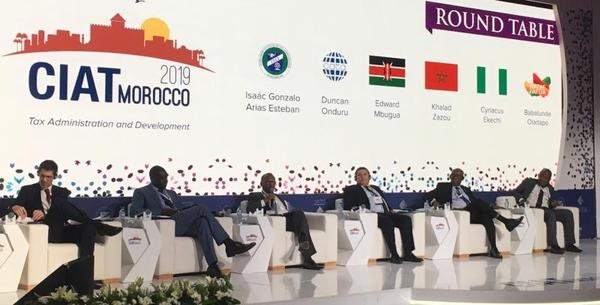
10/21/2019 All-African panel on the role of tax administrations in the mobilisation of domestic revenue at CIAT Technical Conference, notably featuring two members of regional tax organisations: Duncan Onduru (CATA) & Babatunde Oladapo (WATAF) An all-African panel on the role of tax administrations in the mobilisation of domestic revenue took place at the  CIAT Technical Conference. Duncan Onduru (CATA) and Babatunde Oladapo (WATAF) were present and shared their expertise. The main question that was discussed was: “How to move away from doing pure tax collection and provide wider tax administration?” Discussions revolved around letting government define their own priorities, stepping up efforts to widen the tax base, organising cross-government dialogues on taxation to secure political ownership and align objectives, and introducing ICT within the tax chain to modernise processes. The Morocco Revenue Authority made a strong case for greater international cooperation to commonly face up to new challenges such as the prediction of future needs for services in the medium/long-run.

All-African panel at the CIAT Technical Conference Read More »

4th NTO Executive Council Meeting at the French Ministry of Economy and Finances in Paris

02/11/2020 On 27 January 2020, the heads and focal points of ATAF, CIAT, CREDAF, IOTA, and WATAF participated in the 4th NTO Executive Council Meeting. On 27 January 2020, the heads and focal points of ATAF, CIAT, CREDAF, IOTA, and WATAF participated in the 4th Executive Council meeting of the Network of Tax Organisations (NTO). The meeting was moderated by the International Tax Compact (ITC) Secretariat and hosted by CREDAF at the French Ministry of Economy and Finances in Paris. The Secretariat of the NTO communicated apologies from the Secretariats of CATA, PITAA and ATAIC for not being able to attend this meeting and their hope to be able to engage in future meetings. NTO members made considerable progress in setting up the agenda, funding structure and communication strategy of the 1st NTO Technical Conference, which will be held from 13 to 15 October 2020 in Rome, Italy. The conference will be hosted by the Guardia di Finanza. Jointly organised by the nine regional and international tax organisations that comprise the NTO, the conference will serve as a unique opportunity to bring together policymakers and practitioners from over 170 revenue administrations.

4th NTO Executive Council Meeting at the French Ministry of Economy and Finances in Paris Read More »

5th NTO Executive Council Meeting takes place virtually

05/27/2020 On 7 May 2020, the heads and focal points of all nine NTO member organisations participated in the 5th NTO Executive Council Meeting. On 7 May 2020, the heads and focal points of all nine NTO member organisations (ATAF, ATAIC, CATA, CIAT, CREDAF, COTA, IOTA, PITAA, WATAF) and the Italian Guardia di Finanza participated in the 5th NTO Executive Council Meeting. Held online, the meeting was chaired by Marcio Verdi, Head of the NTO Council, and hosted and moderated by the ITC Secretariat. In light of the impact and consequences of the COVID-19 pandemic, NTO members unanimously agreed to postpone the first NTO Technical Conference, which was scheduled to take place in October 2020 in Rome, Italy. Instead, the conference will take place in October 2021. Its preparation will be integrated in a series of activities linked to the theme of the conference, “tax and crime”. A public webinar on this topic will be held in October 2020 (date TBC). The Secretariats of the NTO member organisations will next meet on 29 June 2020 for an internal webinar on “Digitalisation and new ways of working”. The sixth NTO Executive Council Meeting will be held on 6 July 2020.

5th NTO Executive Council Meeting takes place virtually Read More »

Translate »