Latest News

Driving Towards Sustainability: NTO’s Environmental Taxation Webinar Takeaways

04/17/2024 Professionals from tax authorities affiliated to the members of the NTO shared their learned experiences on the implementation of environmental taxes. On 26 March 2024, the Network of Tax Organisations (NTO) hosted a webinar on “Implementing Environmental Taxes: Best Practice and Lessons Learnt.” The webinar represented a significant discourse in showcasing learned experiences on the implementation of environmental taxes. Ms. Tochukwu Onyemata of the West African Tax Administration Forum (WATAF) moderated it, and it comprised country case presentations from Norway and South Africa. For more information, including the agenda, please visit the event site. The concept of environmental taxation has increasingly gained traction in the late 20th century, particularly with rising concerns about environmental degradation, pollution, and resource depletion. This form of taxation has been perceived as a necessary augmentation to traditional regulatory approaches to tackle complex environmental challenges effectively. The Kyoto Protocol and the Paris Agreement have further emphasised the role of economic tools in combating climate change. Consequently, various nations have incorporated environmental taxes and other market-based instruments into their strategies for addressing the challenges arising from climate change and in pursuit of sustainable development, marking a paradigm shift towards recognising environmental considerations in economic decisions. Although the implementation of environmental taxes in different countries has varied, the overall aim is to align economic activities with sustainability goals, involving legislative frameworks, targeted taxation, emission-trading systems, incentives, and international cooperation. The primary focus of global debates on environmental taxation revolves around carbon dioxide (CO2) emissions, with only a fraction of global greenhouse gas emissions currently covered by explicit carbon pricing instruments. The insufficient coverage of energy-related carbon emissions and the challenge of internalising social costs through direct carbon prices, compounded by increasing fossil fuel subsidies, call for urgent carbon tax reforms. Moreover, environmental taxes extending beyond carbon also play a crucial role in the global transition towards sustainability. The NTO webinar aimed to facilitate the exchange of best practices and lessons learned in the implementation of environmental taxes. This event brought together experts and professionals from NTO member organisations’ tax authorities to discuss country-specific case studies and delve into the various aspects of environmental taxation. Presentations from Norway and South Africa were featured to explore how environmental taxes, including carbon taxes, harmonise economic activities with sustainability goals in different global contexts. Screenshot during Norway’s presentation  Norway’s presentation provided insights into the country’s use of CO2 taxes and road usage levies on fuel products. It highlighted the environmental rationale behind these taxes and the challenges faced, such as the relationship between CO2 tax and emission trading and the management of biofuels. Innovations like GPS-based road user charges were discussed to accommodate the increasing prevalence of electric vehicles. Screenshot during South Africa’s presentation  South Africa’s presentation began with an overview by the National Treasury on the pivotal role of environmental tax reforms and carbon pricing in steering the country towards a greener economy. It detailed how environmental taxes in South Africa aim to efficiently tackle environmental challenges while promoting sustainable practices. South Africa’s carbon tax policy, established after extensive stakeholder consultations and meticulous planning, was highlighted as a cornerstone in enforcing accountability and factoring in the true costs of greenhouse gas emissions into decision-making processes. The South African Revenue Service (SARS) complemented this with a presentation on the administration of environmental taxes governed by the Customs and Excise Act of 1964. This presentation provided an overview of the seven environmental taxes and levies administered by SARS and delved into specifics like the CO2 levy on new motor vehicles, tyre levy, carbon fuel levy, and carbon tax. Additionally, it elaborated on compliance measures, highlighting South Africa’s dedication to environmental conservation and fiscal responsibility. The webinar included a question-and-answer session and open discussion, allowing for a rich exchange of ideas and experiences among the participants.  In the closing remarks delivered by Ms. Onyemata of WATAF, she encapsulated the essence of the discussions and the ongoing commitment towards environmental taxation as a tool for sustainable development. In summary, the NTO webinar on environmental taxation was an important forum for learning and peer-exchange for tax administrations on the implementation of environmental taxes. It underscored the importance of these taxes in driving economic development that is in harmony with environmental preservation, thereby contributing to a global shift towards sustainability. Speakers’ presentations during the NTO webinar on environmental taxes, 26 March 2024.

Driving Towards Sustainability: NTO’s Environmental Taxation Webinar Takeaways Read More »
Using Beneficial Ownership Transparency for Tax Collection

07/31/2024 The aim of this NTO-IBFD training programme is to equip tax administrations worldwide with the tools and best practices to combat tax evasion, money laundering, and other illicit activities, leading to enhanced Domestic Revenue Mobilisation (DRM) and contributing to global financial integrity. The Network of Tax Organisations (NTO), in collaboration with the International Bureau of Fiscal Documentation (IBFD), is launching the training course “Using beneficial ownership transparency for tax collection”. This course, set to begin in September 2024, is designed to equip tax administrations with the tools and knowledge needed to effectively address tax avoidance schemes related to the manipulation of asset ownership. While the training will focus on practical tax aspects of beneficial ownership (BO) transparency, it will also cover international anti-money laundering (AML) standards in that field. As illicit financial flows exploiting the separation between legal and beneficial ownership play a crucial role in avoidance schemes that cost economies hundreds of billions of dollars, the importance of this issue cannot be overstated. The course seeks to enhance the capacity of tax administrations to tackle these challenges, enhancing domestic Revenue Mobilisation (DRM), and ensuring fair tax practices. The training comprises four modules, each featuring 3 to 4 hours of pre-recorded videos available one week in advance for self-paced learning. This is complemented by a live session offering space for practical exercises and Q&A opportunities, delivered twice to accommodate different time zones. Interpretation from English into French and Spanish will be available. Retrieved from UN DESA Policy Brief No. 148  The course offers in-depth modules on beneficial ownership, tax planning schemes, access to information, and tax compliance and enforcement, addressing complex issues such as intricate ownership structures, treaty shopping, enforcement practices, and international standards, and much more. Participants will explore the intricacies of tax avoidance schemes, covering best practices and enforcement tools to combat sophisticated manipulations in asset ownership. This NTO-IBFD initiative stands out from other BO transparency efforts due to its practical approach: it goes beyond delivering international standards and legal frameworks and dives into practical challenges and ways of improving enforcement using efficient tools and mechanisms to enhance tax authorities’ responses to these challenges. Outline of the NTO – IBFD training course “Using Beneficial Ownership Transparency for Tax Collection” The training responds to the pressing needs of tax administrations affiliated to NTO members, who face significant challenges in tackling those fields. Consequently, the benefits are twofold: the course builds capacities to increase revenue collection, and at the same time increases the fairness of the tax system by targeting sophisticated taxpayers that usually have financial resources to structure ownership manipulations schemes. This initiative is particularly relevant for staff in revenue administrations working both in field and headquarters, and particularly international tax experts. In addition, the training course is useful for ministries of finance in designing appropriate domestic policies that effectively tackle avoidance schemes and increase revenue collection. Crime enforcement agencies can also benefit from the course. Participation in this course is by invitation only. This comprehensive programme represents a significant step forward in the global effort to enhance tax transparency and combat tax avoidance. For questions, please contact secretariat@taxcompact.net About The Network of Tax Organisations (NTO) is a network of ten regional and international tax organisations that aims to develop a global platform to strengthen tax systems around the world for the wellbeing of citizens. The NTO aims to develop new knowledge resources for tax administrations by building programmes for improving capacity of effective Domestic Revenue Mobilisation (DRM). As the scale of illicit financial flow using the separation between legal and beneficial ownership has been estimated to be in the hundreds of billions of dollars, one can only imagine the estimated loss of revenue from non-criminal tax avoidance using legal financial flows. Being a global phenomenon, which is highly prioritised by international institutions, ownership tax avoidance is a challenge that many of NTO members and their affiliated tax authorities share.

Using Beneficial Ownership Transparency for Tax Collection Read More »

Strong partnerships are key to successfully fight IFFs

11/26/2021 Cooperation, exchange, transparency, information were some of the concepts highlighted by speakers and attendees of the NTO 1st Technical Conference, the three-day virtual event dedicated to Building stronger partnerships to fight tax-related Illicit Financial Flows (IFFs) (see figure 1). In one word, what do you consider the biggest challenge in fighting IFFs?   Figure 1: participants’ perception of current challenges in fighting IFFs “Many tax-related Illicit Financial Flows can only be effectively tackled in a common effort”, Márcio Ferreira Verdi, Head of the NTO Council and Executive Secretary of the Inter-American Center of Tax Administrations (CIAT), underlined in his opening speech. “Revenue authorities, customs, financial crime units and other relevant agencies need to cooperate on both national as well as international level to be successful in this undertaking.” Member tax administrations of the nine NTO regional and international tax organisations, international stakeholders and academia came together to exchange good practices to fight tax-related IFFs, build new and deepen existing partnerships among policy makers, tax administrators and other participants and learn from each other. “Learning from each other is very important, it is the only way that we can reduce the gap among our countries,” Verdi said. High-level speakers representing the International Monetary Fund (IMF), the High-level Panel on International Financial Accountability and Integrity (FACTI panel) and the German Ministry of Economic Cooperation and Development (BMZ), who followed M. Verdi with their opening remarks, seem to have come to an aligning common conclusion: fostering consolidated global efforts is essential in the fight against IFFs. “Illicit financial flows undermine our efforts to mobilize domestic revenues. Even worse, they also increase inequality – because wealthy individuals and corporations escape their obligations to society”, Dr. Maria Flachsbarth, the Parliamentary State Secretary to the BMZ, stated in her opening remarks. Thus, she addressed one central problem: tax avoidance, which has become a major concern in the battle of tax crime. Both tax evasion and avoidance must be tackled like any other type of tax offence. Giving an overview of the current international developments and existing challenges was at the core of day one. Prof. Attiya Waris, UN Independent Expert on Foreign Debt and Human Rights, explained in her keynote speech the critical need of disclosure of the income produced within an economy, which allows money to circulate in its domestic economy and governments to collect taxes: “IFFs have reduced the ability of a government to not only have money circulating in the economy, but actually to increase its own revenue. […] The most important challenge is not only to make sure that money is located – it is to make sure that the money is returned to its original economy”. Panelists followed by also addressing such challenges as porous country borders, weak organizational structures of tax authorities and the fact that tax administrations and law enforcement agencies keep on working in silos. “Financial crimes – especially IFFs – are becoming much more international”   As a main takeaway from the opening panel, the attendees stressed the importance of sharing experiences, knowledge, information among tax agencies, administrations, and other relevant tax authorities. Furthermore, there was a high level of consensus on the necessity of local, regional, and international cooperation and collaboration: “We can only effectively fight IFFs with proper international cooperation [and] effective information exchange […]”, an attendee added. This gives rise to a whole-of-government approach, which includes not only collecting and sharing information, but more importantly the ability to examine, assess and interpret composed data (see figure 2: upper right corner). Furthermore, panelists highlighted capacity building in jurisdictions and, in particular, tax administrations as an important measure to fight tax frames and IFFs. In the following sessions, participants addressed the role of beneficial ownership in combating tax crimes as well as effective responses from tax administrations to illegal activities: Looking at the practice of implementation of a Beneficial Ownership (BO) register, participants came to the conclusion that an accurate BO register is necessary to combat IFFs efficiently and to ensure that every entity is contributing its share to the development of the country of residence of its owner. The main issue identified though, is the verification of BO data in such registers. It is necessary to have measures in place to ensure the reported data is correct and a sanction plan in place in case the opposite is revealed (e.g. restriction of business activities)   Figure 2: Graphic summary of day 1 on “International Developments and Existing Challenges” In the meantime, another group of experts was discussing how tax administrations can contribute to global security and at the same time foster sustainable growth of economies when combating threads such as financing terrorism, money laundering and tax evasion. “Tax administrations have a vital role to play in supporting law enforcement agencies by reporting cases of money laundering and providing evidence for further investigations”, Cleber Homem da Silva, Head of the Research and Investigation Office in Rio de Janeiro of the Brazilian Revenue Authority (RFB), explained. The Indonesian experience in implementing and conducting digital forensics, an investigation tool to identify criminal actions in the field of tax evasion was well received by the audience. Speakers also discussed other effective investigative tools, the importance of political will and the need to “follow the money flows”.   “International cooperation is a continuum”   In the course of the second day, the speakers debated on how to shape international cooperation and discussed current challenges that were introduced by the audience, such as secrecy, conflict of interest, communication and trust. What is the first term that comes to your mind when you think about the challenges we face in international cooperation? Figure 3: Participants’ perception of current challenges in the realm of international cooperation One of the main issues in the realm of international cooperation highlighted, is the creation of a common understanding of a particular country’s problem among all the stakeholders involved. In response to the question on how to enhance inter-institutional collaboration, the panellists agreed that it is crucial to support partners

Strong partnerships are key to successfully fight IFFs Read More »

Combatting Tax Avoidance by Multinational Corporations

05/06/2022 Illicit Financial Flows (IFFs) and the role of tax administrations, regional and international organisations in combatting them internationally NTO post-Conference Webinar on “Capital flight, (aggressive) tax planning by multinational companies (MNC), IFFs connected to MNCs” Over the years, combatting tax avoidance by MNCs and other tax-related IFFs has become a top priority on the international tax policy agenda. As many developing countries are importers of capital and depend on Foreign Direct Investment (FDI), making sure these benefit the recipient country and are fairly taxed is crucial to their DRM collection and sustainable economic development, whereas tax codes and tax administration play the decisive role in this process. Several months after the 1st NTO Technical Conference on “Building stronger partnerships to fight tax-related IFFS”, the NTO hosted a webinar with the focus on the topic “Capital flight, (aggressive) tax planning by multinational companies (MNC), IFFs connected to MNCs” on 28 April 2022 that brought together over 300 participants from over 50 countries across the world. The fruitful round table discussion was moderated by Ms. Chenai Mukumba, Policy Research and Advocacy Manager at Tax Justice Network Africa (TJNA), and provided a platform for dialogue and peer exchange for tax officials and experts. A new tax code to curb decades of aggressive tax planning undertaken by MNCs in Benin. Among various tax avoidance schemes observed in Benin, the most used are thin capitalisation, transfer mispricing, avoiding permanent establishments, use of conduit entities through treaty shopping and transferring company shares at lower-than-market prices. “The Republic of Benin is poor in natural resources and relies heavily on tax revenues and foreign aid to fund its public expenditure. Capital flight represents a significant problem in Benin – especially since our country faces pressing needs to accelerate progress in social and economic development to achieve the UN’s Sustainable Development Goals (SDGs) by 2030,” Mr. Yakoubou Moussa Garba-say, Senior Tax Officer at the Directorate General of Taxes (DGT) of Benin, emphasised. Benin has addressed the loopholes in its tax laws and hopes to tackle decades of MNCs’ illicit schemes with the adoption of the new tax code (in force from the 1st of January 2022), which includes Specific Anti-Avoidance Rules (SAAR), introducing stricter thin capitalisation rules and transfer pricing regulations among others. A major gap Benin needs to bridge is the adoption of General Anti-Avoidance Rules (GAAR), a powerful legal toolkit and last resort mechanism for tax authorities. The adoption of the BEPS minimum standards is also an opportunity for Benin, who has not completed the implementation yet. At the same time, “capacity building of tax officers is necessary to enhance the efficiency of our administration. International tax cooperation should also be used to counter capital flight not only in Benin but also worldwide, as aggressive tax planning by MNCs is a global issue,” added Mr. Yaya Kora Gounou, Senior Tax Officer at the Large Taxpayer Unit of the DGT Benin. The NTO perspective is a synonym for integration, collaboration and coordination. Subsequently, Mr. Márcio Ferreira Verdi, Head of the NTO Council and Inter-american Center for Tax Administration (CIAT) Executive Secretary, and Mr. Emeka Francis Nweke, Tax Research Manager at West African Tax Administration Forum (WATAF) Secretariat, reflected on the adequate response from tax administrations and different initiatives developed to address MNC’s illicit schemes, considering the scope for regional and international tax organisations to contribute to this endeavour. “It is imperative to promote the exchange of knowledge, experiences, explore current best practices with neighbours with all nine (NTO) member organisations,” Mr. Verdi underlined. This is something all participants agreed with during the open discussion, including Dr. Jeffrey Owens, Director of the WU Global Tax Policy Center at Vienna University of Economics and Business, who highlighted the importance of interagency cooperation and keeping the spirit of the law. “Now there are so many opportunities for developing countries to exploit the new framework and to put more pressure on MNCs and other countries, and to change the nature of the debate. It’s all about changing behaviour, which will not be an easy process,” Dr. Owens commented. To combat IFFs as part of its mandate of strengthening tax administrations in West Africa, WATAF has facilitated the Automatic Exchange of Information, organises capacity building trainings, and enlightens member countries on the taxation of the digital economy. “Since this predisposes countries to BEPS-related challenges, WATAF advocates for member countries to plug the loopholes by developing robust, legislative frameworks across governmental and multilateral agencies to ease compliance with tax laws,” Mr. Nweke explained. WATAF created the Audit and Risk Managers Network, engages in collaborations with like-minded organisations that are willing to achieve the mandate of eliminating IFFs in Africa, and offers country-specific support. Commenting on a participant’s question on how the Western world can help to discourage capital flight by investors in African economies, Mr. Nweke underlined the significance of international cooperation. Before closing the discussion, Mr. Verdi showed attendees a photograph of the Executive Secretariats of COTA, CIAT, CATA and SGATAR Meeting in the Philippines in 1988, who came together to discuss the importance of establishing an umbrella organisation to enhance the role of regional organisations. Fast forward to today, it has been almost 5 years since the creation of the NTO. Mr. Verdi emphasised that the NTO’s mission has just started and there is a need to continue promoting the work of the NTO and its member organisations and ensure there is space for peer-to-peer learning in the fight against IFFs. The NTO appreciates the participation of all the speakers and guests and is looking forward to welcoming all of them to further webinars.

Combatting Tax Avoidance by Multinational Corporations Read More »

VAT digital toolkit for Latin America and the Caribbean region

05/27/2022 A specifically designed toolkit to assist Latin American and the Caribbean tax authorities in the design and implementation of robust policies for the application of VAT to digital trade and e-commerce. Value Added Tax (VAT) collection is one of the most important revenue sources for developing countries and is the largest source of tax revenue on average in the Latin American and the Caribbean region. It is not only important to safeguard these specific revenues in an economy affected by globalisation and undergoing a digital transformation, but it is also necessary to take action to ensure that VAT is collected effectively and efficiently on the rapidly increasing volumes of e-commerce sales to finance sustainable development and strengthen the redistributive power of tax policy in the Latin American and the Caribbean region. Led by the Organisation for Economic Co-operation and Development (OECD), the Inter-American Center of Tax Administrations (CIAT), the Inter-American Development Bank (IDB), the World Bank Group (WBG) and the Norwegian Agency for Development Cooperation (NORAD) coordinated efforts to develop a toolkit that allows tax administrations in 13 Latin American and Caribbean countries to design a system that facilitates VAT management in the digital economy and its subsequent collection. Based on the internationally agreed OECD policy framework, the VAT digital toolkit provides comprehensive and detailed guidance for the policy design, implementation and operation of a comprehensive VAT strategy targeted at digital trade in the specific region. To learn more about the VAT digital toolkit for Latin America and the Caribbean, interested tax administrations can access the handbook in English and Spanish here. For further information: find more about CIAT.

VAT digital toolkit for Latin America and the Caribbean region Read More »

Understanding and Addressing Patterns of Aggressive Tax Planning in the Tourism Industry

07/08/2022 The reality of interconnected national economies has provided economic agents with propitious opportunities to minimise their tax liabilities through aggressive tax planning. The problem of tax minimisation through aggressive tax planning is particularly relevant in the tourism industry, where actors are usually not in the tax jurisdiction in which they operate. Tourism plays a significant role in the economies of many countries of the Global South. In countries located in the Pacific islands, for example, the industry serves as the primary source of foreign currency earnings. The tourism sectors in these countries are especially vulnerable to aggressive tax planning because the dominant economic agents are often large cross-border entities with sophisticated networks of related parties that allow them to minimise their tax liabilities. A prime example is the experience of Fiji where a substantial portion of transactions that concern its tourism sector are carried out outside its tax jurisdiction. These economic agents use offshore, related parties to act as travel agents, who collect monies from tourists and remit a net amount to Fiji, which is then declared for tax purposes. On 14 July 2022, the Network of Tax Organisations (NTO) will hold a webinar on ‘Understanding and Addressing Patterns of Aggressive Tax Planning in the Tourism Industry’ to discuss how tax administrators can understand and tackle the problem of tax minimisation and aggressive tax planning in the tourism sector and beyond. During the Webinar, representatives from the tax authorities of Fiji and Nigeria will share their experiences in dealing with the issues of tax minimisation in their respective tourism sectors. For more information, please contact secretariat@taxcompact.net.

Understanding and Addressing Patterns of Aggressive Tax Planning in the Tourism Industry Read More »

Understanding and Addressing Patterns of Aggressive Tax Planning in the Tourism Industry

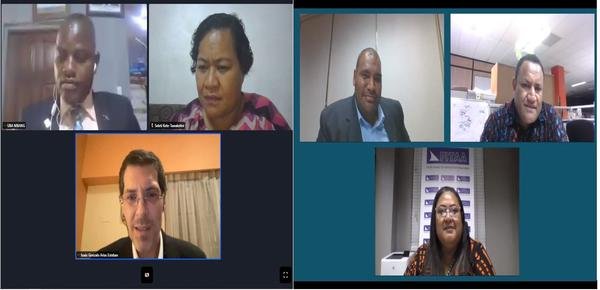
07/27/2022 Aggressive tax planning by domestic and cross-border economic agents represents an obstacle towards effective domestic revenue mobilisation, thus, preventing growing economies from reaching their developmental goals. Aggressive tax planning is present in many industries, but its implication presents a special challenge in the tourism sector and, particularly, for tourism-dependent countries. On 14 July 2022, the Network of Tax Organisations (NTO) hosted a webinar on “Understanding and Addressing the Issue of Aggressive Tax Planning in the Tourism Industry”. The representatives of Fiji and Nigeria shared insights into the patterns of aggressive tax planning in their respective jurisdictions, while a representative from the Inter-American Center of Tax Administrations (CIAT) provided an organisational perspective on the issue. The peer-learning webinar, moderated by Ms. Koni Ravono, the Head of Secretariat at Pacific Island Tax Administrators Association (PITAA), brought together 150 tax administrators and participants from all over the world. The webinar yielded fruitful exchanges that enhanced the knowledge and insights of participants on the issue of aggressive tax planning and remedial measures. Ms. Ravono underlined the importance of the topic highlighting that aggressive tax planning and other profit-shifting tactics practised by economic agents results in annual revenue losses of USD 100-600 billion across the global South. The topic resonated with many of the participants, with a large portion indicating in the poll that strategic transfer planning is the most frequently used aggressive tax planning tactics for tax liability minimisation in their respective jurisdictions. Further, the participants noted weak regulatory environments as the primary challenge they face. The first speakers, Ms. Seleti Kete, Mr. Navitalia Biukoto, and Mr. Tevita Tuiloa, from the Fijian Revenue and Custom Service, elaborated on issues of concern for tax authorities in Fiji’s Tourism Industry. Rich environment and picturesque beaches make over 300 Fiji’s islands a desired holiday destination and a lucrative business, profiting from existing industry specific tax benefits and other loopholes. Mr. Biukoto explained that while the reliance on cross-border online agents affords economic agents the chance for tax minimisation, the abuse of tax rules by tourism operators that engage in direct bookings of guests have been a source of grave concern to tax authorities in Fiji. Through structured arrangements with complex related entities, wholesale marketing agreements, intellectual property abuse, profit offshoring, thin capitalisation, net rate contracting, and tax withholding, operators of tourism enterprises move funds from Fiji to low information and low tax jurisdictions in other to reduce their tax liabilities and conceal the identities of beneficial owners of commercial entities. Mr. Biukoto also emphasised scarcity of resources, lack of information, and the recalcitrance of taxpayers as main obstacles against tackling aggressive tax planning. He, however, cited that the Fijian authorities are continuously striving for quicker means to tackle these issues. Recent activities to this end include a proposed legislative instrument geared towards combatting aggressive tax planning, peer learning, and raising awareness among politicians and operators of tourism enterprises. Dr. Uba Bassy Mbang, from the Nigerian Federal Inland Revenue Service, presented Nigeria’s experiences with aggressive tax planning schemes employed by commercial enterprises for the sole purpose of reducing their VAT obligations. Per the presentation, patterns of aggressive VAT planning in Nigeria ranges from exploitation of free trade zones, trade-based VAT abuses, to the use of foreign languages and currencies in tax reporting. Importantly, Dr. Mbang noted that VAT abuses are not limited to the activities of for-profit enterprises. He pointed out that non-profit organisations in Nigeria take advantage of their status to minimise their tax obligations by lumping VAT taxable activities together with tax exempted activities. Dr. Mbang enjoined that strengthening regulatory environments and establishing pre-emptive measures are avenues to forestall these aggressive tax planning tactics. Mr. Gonzalo Arias, from CIAT, added to the discussions by explaining that the experiences from Nigeria and Fiji are similar to those in Latin America. In recognising the complexities of tackling aggressive tax planning, Mr. Arias recommended that participants and tax administrators peruse a 2020 CIAT published document titled ‘Cocktail of Measures for the Control of Harmful Transfer Pricing Manipulation, Focused Within the Context of Low Income and Developing Countries’. He signified in his presentation that the use of “Referential Profit Margin” could be extremely useful in countries with low capacity and weak regulatory structures. This would entail the development of simple measures for calculating and setting preliminary referential margins for taxpayers in way that would allow tax administrators determine the magnitude of base erosion according to economic and industrial sectors. Thus, CIAT recommends that countries should adopt a risk-based approach that emphasise research and planning. Moreover, Mr. Arias lauded the Dominican Republic as an exemplar country with its use of “Advance Price Agreement” in ensuring tax compliance through bespoke tax liability criteria agreement between the taxpayer and tax authorities in its Tourism Sector. In his closing remarks, he expressed the willingness of CIAT to further enlighten members on Referential Profit Margin and other measures that can be used in combatting Aggressive Tax Planning. The presentations and peer-exchanges from the webinar attested to the fact that aggressive tax planning is a complex issue which requires coordinated combatting measures involving cross-border tax authorities. Consequently, tax administrators are advised to engage in scrupulous information gathering, risk assessment, and robust stakeholder engagement in the quest of tackling aggressive tax planning. The NTO, through its webinar series strives to become a platform where tax administrators and concerned stakeholders can exchange perspectives and knowledge that could aid the fight against aggressive tax planning, and other tax malpractices. The NTO appreciates the participation of all the speakers and participants and is looking forward to welcoming them to further webinars.

Understanding and Addressing Patterns of Aggressive Tax Planning in the Tourism Industry Read More »

The Network of Tax Organisations members participate in the 2022 CIAT Technical Conference

10/13/2022 Members of the Network of Tax Organisations (NTO) participated in the Centro Interamericano de Administraciones Tributarias (CIAT) Technical Conference which was held between 4 and 6 October 2022 at Granada, Spain. The conference theme was “The Sapiens administration: Information and knowledge management to improve the prevention and struggle against fraud”. In further exploration of the theme – cross-border cooperation between different tax administration jurisdictions, CIAT organised a roundtable with NTO Members titled “Perspectives and challenges of tax organisations: The digital divide” which saw the active engagement of NTO members.  In addition to CIAT, the NTO members that participated in the roundtable were African Tax Administration Forum (ATAF), Association of Tax Authorities of Islamic Countries (ATAIC), Commonwealth Association of Tax Administrators (CATA), Caribbean Organization of Tax Administrators (COTA), Cercle de Réflexion et d’Échange des Dirigeants des Administrations fiscales (CREDAF), Intra-European Organisation of Tax Administrations (IOTA), and West African Tax Administration Forum (WATAF). For additional details, please click here

The Network of Tax Organisations members participate in the 2022 CIAT Technical Conference Read More »

NTO Webinar on Tackling Cross-Border VAT Fraud

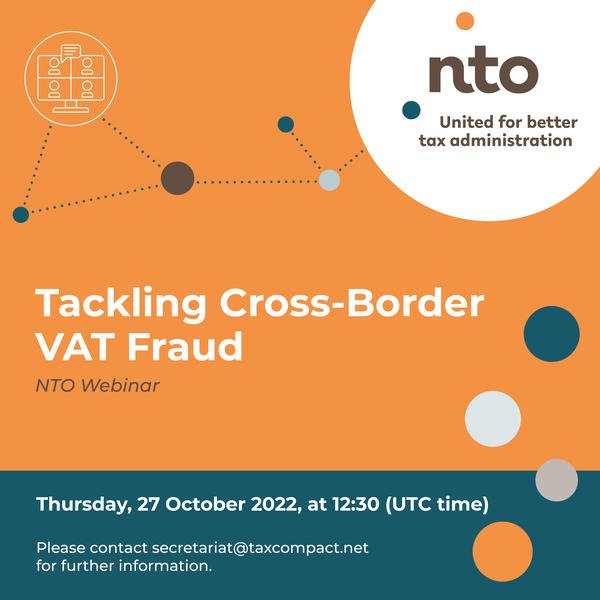
10/14/2022 Value Added Tax (VAT) is a form of indirect tax levied on goods and services by more than 170 countries. Often, VAT constitutes an important pillar of government revenue. However, the interconnectedness of national economies has contributed to increasing avenues for avoiding and evading VAT obligations. There are several varieties of VAT fraud. However, these frauds are groupable into two broad categories. The first category is the classic underreporting of VAT obligations to the government. The second variety of VAT-based fraud often involves organised complex chains of interconnected transactions and economic agents across national boundaries. These economic agents exploit the weakness of VAT systems across trade jurisdictions with the primary aim of defrauding governments of tax revenue. For instance, missing trader intra-community fraud-a variety of cross-border VAT fraud accounts for about EUR 60 billion yearly loss in revenue to European Union (EU) member states. On 27 October 2022, the Network of Tax Organisations will hold a webinar on “Tackling Cross-Border VAT Fraud”. Through real-world case presentations, representatives from the General Directorate of Public Finance (DGFIP) of France and the South African Revenue Services will provide insights into the patterns of cross-border fraud and mechanisms for tackling its. In addition, the African Tax Administration Forum (ATAF) will provide further highlights on cross-border VAT fraud from the perspective of a regional tax organisation. Please find the concept note and programme of the event. Here is the French and Spanish version of the concept note. For more information, please get in touch with secretariat @taxcompact.net

NTO Webinar on Tackling Cross-Border VAT Fraud Read More »

ATI and ATAF host a side-event on tax and gender

10/28/2022 Gender equality forms a key part of the Sustainable Development Goals (SDGs) and the global effort on the reduction of poverty and the realisation of economic development for all. The COVID-19 pandemic has deepened inequality and widened economic gaps between women and men by reversing previously recorded gains, there by threatening the attainment of this goal. Public finance, particularly taxation, as a well recognised source of sustainable finance, plays a crucial role in the elimination of gender and other forms of inequality in developing countries and elsewhere. For instance, taxes can be designed to encourage greater women participation in the labour force, by among others, providing child tax credits, etc. This helps to boost economic growth for better development and social outcomes. Tax policy can also be reformed in ways that tackle the existing biases of tax systems. The Addis Tax Initiative (ATI) recognises the profound impact of tax and domestic revenue mobilisation policies in reducing gender inequality. One of the principles that form the foundation of the ATI cooperation is that members’ will “strive to promote gender-responsive action as part of all ATI partnerships and initiatives, including by collecting and evaluating appropriate data within the ATI”. In practice of this principle, the Addis Tax Initiative (ATI), in collaboration with the African Tax Administration Forum (ATAF), is organising a side-event titled “A gendered approach to taxation: Improving the equitability and efficiency of DRM” on 31 October 2022 at the 7th ATAF General Assembly in Lagos, Nigeria. Among the expected participants are the representatives of tax administrations, Ministry of Finances (MoF) of ATAF member countries, ATI partner countries, development partners, and supporting organisations. The gender impact of tax policy is also recognised by ATAF as one of the challenges that confronts African governments’ DRM efforts. In 2021, ATAF launched its Women in Tax Network (AWITN), seeking to bring more women into higher positions in tax matters and raise awareness on the interconnectivity between tax policy and gender equality. The ATAF-ATI side event will feature sessions to highlight the various aspects of the emerging tax and gender dialogue. It will shade light on the nature of gender biases in tax systems, on how these biases affect women’s participation in the labour force, and on the role of gender disaggregated data in policymaking. Generally speaking, tax biases can be implicit or explicit. While explicit biases are easily delectable from the tax codes of countries, the opposite holds true for the former. Implicit biases refer to the gendered difference in the outcome of tax policy or tax administration which arises due to the gendered patterns of social arrangement, gender pay gaps, and economic behaviour. The biases differ from country to country due to differences in design and local contexts, such as the level of development, the nature of the economy, the gender gaps in education, and the level of economic empowerment. Tax policymakers and practitioners from Ghana, Nigeria, and Seychelles together with a representative from United Nations Department of Economic and Social affairs (UNDESA) will join the panel session to share their perspectives. The session on gender disaggregated data will focus on how data positively contributes to better tax policy reforms demonstrated by the works of ATAF, the International Monetary Fund (IMF), and the Organisation for Economic Cooperation and Development (OECD). For more details of the side-event and to register for a virtual participation, follow the link here.

ATI and ATAF host a side-event on tax and gender Read More »

Translate »