July 2026

NTO-IBFD training course on Beneficial Ownership concludes after four successful modules and eight live sessions

12/12/2024 The course Using Beneficial Ownership Transparency for Tax Collection, a collaboration between the NTO and IBFD, concluded its final live sessions on 3 December 2024, bringing the extensive four-module training programme to a close. The course Using Beneficial Ownership Transparency for Tax Collection, a collaboration between the Network of Tax Organisations (NTO) and the International Bureau of Fiscal Documentation (IBFD), successfully concluded its final live sessions on 3 December 2024, marking the end of a comprehensive four-module training programme. The course, which ran from September to December 2024, combined both international standards and legal frameworks with practical solutions, focusing on the challenges faced by tax authorities globally in enforcing beneficial ownership transparency.                                                                    Screenshot during the first live session, 24 September 2024. Click on the image to know more. The course stands out because, through interactive live sessions and real-world case studies, it brought together participants from tax authorities from different regions, who shared the experiences and challenges they face in the enforcement of their domestic tax laws against taxpayers using intricate structures to disguise true ownership. While the first module was introductory and covered the basics, the rest of the modules were hands-on. The second module focused on analysing complex tax structures to identify tax implications and liabilities, while the third module covered exchange of information (EoI) mechanisms. The fourth module addressed enforcement procedures, including challenges in evidence collection, prosecution, and investigation. It also explored barriers to obtaining information, using data, and balancing procedural limitations, such as taxpayers’ rights, with the government’s need to seek assets and collect information. The course’s stands out for its global reach, bringing together participants from a diverse range of countries to exchange experiences and challenges. Through interactive live sessions dedicated to addressing general questions and discussing real-world case studies, participants from tax authorities in various regions shared insights into addressing the complexities of enforcing tax laws against taxpayers using intricate structures to disguise true ownership. In their remarks during the final live sessions of the training, both NTO and IBFD representatives highlighted the significance of the course in advancing global tax cooperation. Mr. Jules Tapsoba, Executive Secretary of the West African Tax Administration Forum (WATAF), one of the ten members of the NTO, emphasised the importance of aligning beneficial ownership initiatives to combat tax fraud and evasion, particularly in West Africa. He noted that such programmes are critical for strengthening tax administrations and supporting effective fiscal policies. Mr. Tapsoba also underscored the role of international tax cooperation in improving enforcement across borders, with participants from different continents exchanging valuable insights. “This training course marks another milestone in fostering cooperation and equipping tax professionals with the tools to tackle tax evasion and fraud effectively”. Mr. Jules Tapsoba Mr. Jules Tapsoba, WATAF’s Executive Secretary, delivering closing remarks to the course, 3 December 2024 Mr. Victor van Kommer, Director of Tax Services and member of the Executive Board at IBFD, reflected on the programme’s impact, noting that it provided tax authorities with valuable tools to enhance tax compliance and revenue collection. He highlighted the course’s relevance in addressing the global issue of illicit financial flows and the critical role of beneficial ownership transparency in combating tax abuse. He also praised the blended learning format, which combined theoretical knowledge with practical discussions. About the course programme Mr. Birhanu Tadesse Daba, Principal Associate, Capacity Building and Tailored Services at IBFD, and content manager and facilitator of the case studies and live sessions during the training programme, described the course as a multifaceted success. He highlighted the comprehensive scope of the training, which covered beneficial ownership transparency along with related topics like business operation perspectives and tax avoidance schemes. The course was designed to meet the needs of participants at different skill levels — basic, intermediate, and advanced — ensuring it met the needs and interests of all attendees. A major highlight was the active participation and engaging discussions, with many participants staying beyond the scheduled 90-minute live sessions and seeking deeper insights, demonstrating their dedication and commitment. Mr. Tadesse also outlined the course’s structure, format, and delivery times as key strengths. “The course provided a complete picture: setting the scene, diving into the legal framework and practical aspects, and concluding with implementation. Since no country can tackle tax evasion and tax avoidance alone, cooperation with other jurisdictions is needed. The course also covered how to cooperate with others through exchange of information, assistance in tax collection, and criminal investigations”. Mr. Birhanu Tadesse Daba                                            Last case study of the tax training programme, led by Birhanu Tadesse Daba. 3 December 2024 With participants from over 80 countries, the course fostered a vibrant exchange of ideas, highlighting both regional differences in tax administration capacities and common challenges in tackling tax evasion. This underscores the growing need for more initiatives that foster collaboration and practical learning among tax professionals worldwide. Impressions from participants About IBFD IBFD is a centre of expertise offering high-quality information and education on International Tax. IBFD’s research platform allows tax practitioners around the world to access this valuable content, on which they can rely to do their work faster and more effectively. IBFD is an independent (non-profit) foundation with the ultimate goal to promote and disseminate the understanding of cross-border taxation at the highest level. Contact If you have any questions, or suggestions for follow-up or related activities please do not hesitate to contact us at secretariat@taxcompact.net

NTO-IBFD training course on Beneficial Ownership concludes after four successful modules and eight live sessions Read More »

Strengthening ties: NTO Study Visit to IOTA Secretariat in Budapest

01/26/2025 From 18 to 22 November 2024, the IOTA Secretariat in Budapest hosted the 2nd edition of the NTO Study Visit, welcoming colleagues from CREDAF and CIAT. From 18 to 22 November 2024, the Intra-European Organisation of Tax Administrations (IOTA) Secretariat in Budapest, Hungary, hosted the 2nd edition of the Network of Tax Organisations (NTO) Study Visit, welcoming colleagues from the Centro Interamericano de Administraciones Tributarias (CIAT) and the Cercle de Réflexion et d’Échange des Dirigeants des Administrations fiscales (CREDAF). Participants included Neila Jaén, Strategic Services Manager, and Ana Larrotta, Communications and Marketing Specialist, from CIAT, along with Ismaila Diallo, Deputy Secretary General of CREDAF, who took part in a comprehensive programme led by Eugenijus Soldatkovas, IOTA’s Work Programme Manager, to provide insights into his organisation’s work.                                                                  Welcoming session by IOTA colleagues (left) to Study Visit participants (right). Through strategic discussions, observations, and hands-on activities, I enhanced my understanding of operational frameworks that support efficiency and effectiveness in tax organisations. Ana Larrotta, CIAT’s Communications and Marketing Specialist. The visit featured an in-depth exploration of the IOTA Work Programme lifecycle, including its planning, approval, and evaluation stages, led by Soldatkovas. The agenda also addressed technical enquiries and digital event management, along with strategic sessions on communication and promotional activities presented by Erika Szabó, Communications and Publications Specialist at IOTA. All in all, the sessions stood out for their practical relevance. In addition to the formal programme, cultural and networking activities, such as a guided tour of Budapest, enriched the experience by fostering personal connections and mutual understanding. The Secretariat of the NTO engaged with Ismaila, Neila, and Ana to gather further insights into their experiences during their week in Budapest. Could you talk about a specific experience during the NTO study visit that really helped you better understand strategic processes in your organisation? Neila (CIAT): The presentation on IOTA’s Annual Work Programme, which provided me with a deeper understanding of how strategic programmes are planned, implemented, and evaluated. The visit also enhanced my ability to manage projects in a more structured way, especially for hybrid and digital events. For example, I apply a more dynamic approach when organising technical workshops by integrating new digital tools I learned at IOTA. Ana (CIAT): One of the most impactful moments was seeing how technology and tools optimize operations. It inspired me to streamline my processes, prioritise tasks effectively, and use templates to enhance productivity. Observing how all ideas were documented in accessible formats to later use in webinars, events, or articles demonstrated the value of capturing knowledge for future applications. I’ve started documenting meeting outcomes and project insights to ensure nothing is overlooked. Ismaila (CREDAF): Overall, what impressed me the most were the presentations made by the IOTA colleagues on how their organisation works in terms of management: planning and then putting procedures in place to operationalise. Naturally, this requires competent human resources in a professional environment where everyone plays their part on the basis of team spirit.                                                      From L to R: I. Diallo (CREDAF), N. Jaén (CIAT), and A. Larrota (CIAT). What cultural insights or unique practices did you observe during the Study Visit to IOTA? Ana (CIAT): I observed how structured and collaborative IOTA’s publication planning is. This motivated me to adopt clearer, more systematic workflows in my own work, particularly for planning tasks like publications. Could you share your main takeaways or key lessons? Neila (CIAT): I highlight the value of technology as an essential tool for tax administrations. During the visit, we aimed to understand our services better and learn how to optimise their use and processes. I plan to apply this by improving database management, enhancing technical publications, and strengthening technical assistance through digital platforms, which will increase efficiency and impact, and benefit our organisation and members. Ismaila (CREDAF): I’ve learned that procedures are of paramount importance in moving from strategy to operations. So, it’s important to have centralised management of procedures – via the website for IOTA, for example, while maintaining a well-structured sequencing with well-defined levels of responsibility. I also really appreciated the way IOTA manages its focal points in its member tax administrations. All this contributes to improving the efficiency of IOTA’s activities. I’ve started using them as inspiration to improve things in my tax organisation. Ana (CIAT): A key lesson I learned is the importance of prioritising tasks and simplifying information. I’ll apply this by making my outputs more concise and accessible for both internal teams and member countries. Did you face situations that took you out of your comfort zone? Ana (CIAT): As an introvert, I usually listen and observe, but this visit pushed me to ask more questions. It was challenging but helped me engage actively, gain insights, and build confidence in discussions. Neila (CIAT): The supporting environment created by IOTA colleagues made the experience smooth and collaborative. Sharing CIAT’s experience with such a great team of professionals was a pleasure. If this study visit was a movie, how would you name it? Ismaila (CREDAF): Drawing on the IOTA experience: learning tour in Budapest. Neila (CIAT): “Tax Evolution: Connections of the Future”. It reflects how NTO member organisations have the potential to unite forces and overcoming that challenges of modern tax administration using the power of technology and collaboration. Ana (CIAT): I would call it “The Karate Kid” because it reflects my growth journey as a young professional learning through mentorship and hands-on experiences, much like Daniel’s journey with Mr. Miyagi.                                                                IOTA colleagues and participants to the NTO Study Visit. Click on the image for more information. The NTO Study Visit

Strengthening ties: NTO Study Visit to IOTA Secretariat in Budapest Read More »

3rd NTO Technical Conference convenes in Panama

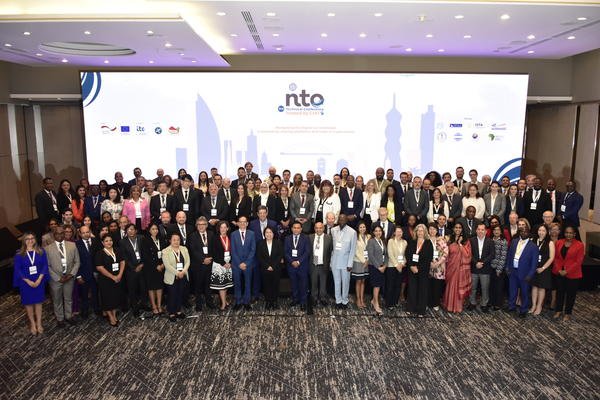
02/18/2025 On Tuesday 18 February, the 3rd NTO Technical Conference kicked off in Panama. The biennial flagship event of the Network of Tax Organisations, hosted by CIAT, has brought together over 300 participants in situ and online to discuss the challenges and opportunities of today’s digital tax landscape.                                                               PRESS RELEASE “With this conference, the NTO once again creates value to its members and underlines its importance in the international tax landscape. Seven years after its inception, the NTO has matured and firmly positioned itself as a dynamic platform for international collaboration and dialogue on tax.” High-level opening remarks by Niels Schütt, Head of Division for Sustainable Development Financing at the German Federal Ministry for Economic Cooperation and Development (BMZ). The rapid digitalisation of the global economy has transformed how income is generated, value is distributed, and economic activities are conducted, resulting in significant challenges for tax authorities. Digital platforms, blockchain, crypto assets, e-commerce, and the gig economy have redefined traditional taxation concepts like place of supply and permanent establishment, complicating enforcement and jurisdiction The three-day Conference of the Network of Tax Organisations (NTO), under the theme “Navigating the digital tax landscape: E-commerce, sharing platforms, and trade in crypto assets”, will serve as a platform for international tax experts and tax administrations worldwide to discuss these challenges, share experiences, and explore practical approaches. The Centro Interamericano de Administraciones Tributarias (CIAT), one of the ten NTO member tax organisations, are the hosts of this year’s Conference. Leading professionals in taxation and international finance have gathered in Panama City and online under the umbrella of the NTO. These include Executive Secretaries and Directors from regional and international tax organisations, as well as senior officials from ministries, revenue authorities, and global and institutions such as the IMF, OECD, and IDB. Together, they bring their collective experience and expertise to enrich the global dialogue on the challenges and opportunities of today’s digital tax landscape. Of the registered participants, 129 delegates are attending onsite, while more than 200 have joined online on the first day. Over the next three days, this diversity of expert voices will offer meaningful contributions on cutting-edge matters related to the taxation of digital assets. “The best channel for knowledge sharing is peer-to-peer.” High-level opening remarks by Marcio F. Verdi, Executive Secretary of the Inter-American Centre of Tax Administrations and Conference host. “This Conference supports EU’s objective to enhance compliance and foster international cooperation to create more transparent, efficient, and equitable tax frameworks.” Nathalie Brajard vom Stein, Deputy Head of Unit for “Macro-economic analysis, Fiscal Policies and Budget Support, Global Parnerships with IFIS” in the Directorate in charge of “Sustainable Finance, Jobs and Growth, an Economy that works for the People” of the European Commission’s DG INTPA for International Partnerships.     “This Conference is the testament of our collective commitment to transparency and efficiency in tax administrations.” Esther Koisin, Executive Director of the Commonwealth Association of Tax Administrators (CATA) and Head of the NTO Council. Technical conferences are flagship events of the NTO and demonstrate the convening influence of 10 regional and international tax organisations. They represent a significant  contribution to the global dialogue on international tax cooperation and revenue administration matters. Previous NTO Technical Conferences: 1st NTO Technical Conference 2021: Building Stronger Partnerships to Fight Tax-Related Illicit Financial Flows 2nd NTO Technical Conference 2023: Digitalisation of Tax Administrations and Contemporary Issues About the NTO The Network of Tax Organisations (NTO) is a network of ten regional and international tax organisations that aims to develop and promote effective tax systems as a means to contribute to the well-being of people. The NTO was founded in May 2018 in Ottawa, Canada, and brings together 10 member organisations that represent over 193 national tax jurisdictions worldwide. Jointly, the NTO aims to develop the capacity of its members and foster international collaboration and dialogue on tax in support of effective Domestic Revenue Mobilisation (DRM). The International Tax Compact (ITC) facilitates the Secretariat of the NTO. The ITC is currently funded by the German Federal Ministry for Economic Cooperation and Development (BMZ), co-funded by the European Union, and implemented by the Deutsche Gesellschaft für Internationale Zusammenarbeit GmbH (GIZ).

3rd NTO Technical Conference convenes in Panama Read More »

The values of the NTO in the spotlight

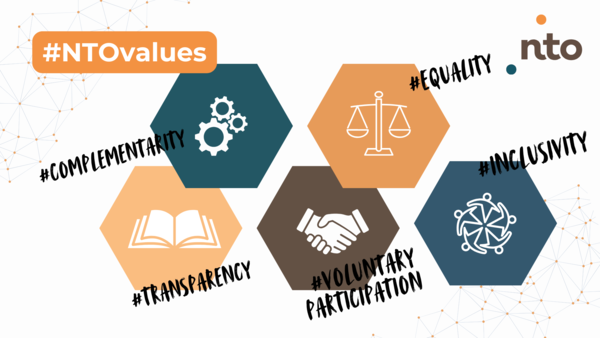
03/07/2025 From March to July, we will showcase the NTO’s core values—complementarity, equality, transparency, voluntary participation, and inclusivity—through member stories that highlight their impact on the network’s activities and achievements. In the aftermath of the 3rd NTO Technical Conference, we are excited to announce the launch of the NTO values campaign. Over the next five months, we will highlight one of the Network of Tax Organisations’ core values each month: complementarity, equality, transparency, voluntary participation, and inclusivity. Through member stories, we will connect these values to the NTO’s activities and successes, bringing them to life within the global network. Complementarity: the NTO aims to complement existing member activities, fostering synergies rather than duplicating efforts. Equality: all members of the NTO are equal, with participation grounded in mutual respect and fairness. Transparency: clear, open communication both internally and externally, about NTO governance and activities is a priority. Voluntary participation: participation in the NTO remains independent, with all involvement based on voluntary engagement. Inclusivity: the NTO is committed to diversity, human rights, gender equality, environmental sustainability, and inclusiveness in its cooperation. The ultimate aim of this initiative is to increase the visibility of the NTO’s guiding principles and foster stronger connections within the network. The campaign will feature quote cards, testimonials, interviews, and short videos, which will be shared on the NTO website and via the NTO Secretariat account on LinkedIn under the International Tax Compact. The NTO Secretariat is facilitated by the International Tax Compact (ITC), which is funded by the German Federal Ministry for Economic Cooperation and Development (BMZ) and co-funded by the European Union. The ITC is implemented by the Deutsche Gesellschaft für Internationale Zusammenarbeit (GIZ) GmbH.

The values of the NTO in the spotlight Read More »

NTO Webinar on Tax & Gender

04/24/2023 Focusing on Mainstreaming Gender in Tax Administrations The Network of Tax Organisations (NTO) will host a webinar on tax and gender on 27th April 2023: more information on the programme and a flyer in English, French, and Spanish can be found here. Gender equality is not only an end in itself, but it helps countries achieve a sustainable economy, higher levels of productivity, and better prospects for the next generation. However, at the moment, countries rely on regressive tax structures which negatively affect women’s livelihoods, while forgoing revenue from large and transnational corporations as well as high net-worth individuals due to tax incentives and inefficient enforcement. The fiscal system can be a strong tool to address gender inequality. Contributing to the international dialogue on the intersection between taxation and gender, our webinar will focus on gender mainstreaming in tax administrations. Country case studies from Pakistan and Zambia as well as a regional perspective from the African Tax Administration Forum (ATAF) and its Women in Tax Network (AWITN) will contribute to closing the gender inequality knowledge gap and foster close collaboration and an exchange of best practices for sustainable development.

NTO Webinar on Tax & Gender Read More »

Mainstreaming Gender in Tax Administrations

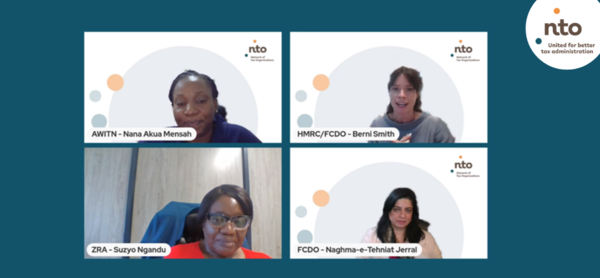
05/10/2023 A webinar with presentations from ATAF, FCDO & ZRA On 27 April 2023, the Network of Tax Organisations (NTO) hosted a webinar on “Mainstreaming Gender in Tax Administrations”. The webinar featured presentations and perspectives from representatives from the Foreign, Commonwealth and Development Office (FCDO) Pakistan, the Zambia Revenue Authority (ZRA), and the African Tax Administration Forum (ATAF). The presentations provided insights on how to address gender inequality in the field of taxation with a particular focus on tax administrations. Ms Berni Smith from HM Revenue and Customs (HMRC) and the FCDO moderated the session. Tax systems have significant implications for gender equality and, hence, require intentional consideration and adaptation on the part of policymakers. This is particularly pressing in the post-COVID world in which many underlying gender inequities have been exacerbated. When dealing with the interaction between taxation and gender, for example, it is imperative for governments to address both the explicit impacts of tax systems on gender equality – which are caused by intentional policy design – as well as implicit gender biases. The latter arise from the interaction of tax systems with existing “gendered patterns of social arrangement, gender pay gaps, and other economic behaviour” that create a favourable outcome for men. The international effort directed at mainstreaming gender aspects in the design and enforcement of tax policy also requires the active engagement of tax administrations: that is including but not limited to the topic of gender disaggregated data collection, empowering women to take leadership roles, and improving the experience of women taxpayers. Laying the foundation for the NTO webinar on “Mainstreaming Gender in Tax Administrations”, Ms Smith (HMRC/FCDO) opened the event with a short input on the topic of tax and gender followed by two polls directed at participants to assess the knowledge and the interest on the topic. The first poll enquired about the percentage of women holding leadership positions in their respective revenue administrations. Most of the participants indicated the proportion of women working in leadership positions to be in the range of 51-80%. The second poll focused on the participants’ preferred mode of exchange for the engagement with other tax administrations on the topic of tax and gender. A large proportion of poll participants indicated peer learning as their preferred format.   Ms Naghma-e-Tehniat Jerral, from the FCDO – Pakistan, presented the Revenue Mobilisation, Investment, and Trade (REMIT) programme in Pakistan. It is the first of its kind regarding gender reforms and the use of taxes to promote gender equality in the country. On the topic of tax enforcement and compliance, one main challenge faced by the country was the tax perception of women. According to this, taxes are perceived as a complex matter which require expensive legal services or the help of their male entourage to be able to comply with the regulations. As a response, REMIT provides trainings to alleviate this fear as well as to create a gender inclusive and enabling environment in tax collection. The second speaker, Ms Suzyo Musukwa Ng’andu from the Zambia Revenue Authority (ZRA), presented the Women Leadership Development Forum (WLDF) which aims at promoting and empowering women to take up senior leadership positions in the ZRA. The goal of the WLDF is to ensure a gender balance in senior leadership positions – director level and above – by 2023. In order to achieve this goal, the WLDF has conducted workshops and trainings for ZRA women including workshops on communication skills, executive presence, and leadership strategies for small and medium-sized enterprises (SMEs). Furthermore, the WLDF is developing a mentorship programme for ZRA women. Ms Nana Akua Achiaa Mensah from the African Tax Administration Forum (ATAF) spoke about the ATAF Women in Tax Network (AWITN) which is a unique platform that connects African women professionals working in the field of taxation. Beyond empowering women to engage in tax, it works towards pushing the discussion on the effect of tax policy on gender equality in African countries. Membership is open to African women within the field of taxation – including governmental and non-governmental institutions, academia, civil society as well as aspiring professionals with an active interest in tax. Ms Mensah highlighted that the platform provides possibilities to exchange, learn, network, and enhance knowledge in the area of taxation. Following the presentations, the Q&A session enabled an insightful peer exchange among the speakers and the participants. Amongst others, it was highlighted that due to the technical nature of taxes and the demanding nature of the relevant trainings, many women are directed away from the area. Positions that presuppose frequent travelling and long working hours, for example in custom offices, could further drive them away. Ms Smith closed the discussion by pointing out that (1) the accessibility of the tax system to women should be drawn to the attention of policymakers as a key step towards the integration of women in the labour markets of developing countries; (2) the integration of women in leadership positions is important to achieve social change and sustainable economic growth; and (3) it is important for women to form partnerships and platforms in order to push the topic of gender equality to the heart of the public debate, as social change requires a coordinated effort. The Network of Tax Organisations (NTO) extends its appreciation to the speakers and the participants of this webinar. As a peer learning platform, the NTO will continue to bring together experts and stakeholders to discuss contemporary tax administration issues. The NTO Secretariat looks forward to welcoming further participants in its future activities.

Mainstreaming Gender in Tax Administrations Read More »

The Digital Transformation of Tax Administrations

07/19/2023 Preparing the ground for the 2nd NTO Technical Conference Enhancing compliance rates among taxpayers and reducing the compliance burdens experienced by both taxpayers and tax administrations are key goals of digitalising tax administration processes. To achieve these goals, tax administrations need to employ a comprehensive strategy that focuses on taking advantage of the potential benefits of the digital transformation, while minimising its potential challenges and disadvantages. To aid the digitalisation efforts and strategies of tax administrations globally, the 2nd NTO Technical Conference will touch upon selected issues regarding the digital transformation of tax authorities. It will take place in Cape Town, South Africa, from 5 to 7 September 2023. NTO Conference on the Digitalisation of Tax Administrations The digitalisation of economies has been moving at an ever-increasing pace bringing fundamental changes to all aspects of society. As a core government business, tax administration is not immune from the shadows of such transformation. Technological innovation and advancement have indeed been causing dynamic and drastic changes in the tax ecosystem across the globe. With this development, the digitalisation of tax administrations is no longer a choice, but a necessity – tax authorities cannot stay behind in the leveraging of digital technologies to optimise their operations. Opportunities and Challenges Digitalisation and technology have the potential to positively shape the way tax administrations collect, process, and act on information which helps to improve the efficiency, transparency, and equitability of the systems. On the part of taxpayers, digitalisation can make tax compliance a more seamless and frictionless experience by integrating it into daily life and business activities. Alongside these positive attributes, however, the journey towards digitalisation of tax administrations has been facing various challenges. Amongst others, the lack of basic technological infrastructure has been one notable challenge in developing countries. On the other hand, challenges faced by transitional economies and developed countries relate to the use of data to improve tax compliance and simplifying tax compliance processes. To enjoy the full potential of digitalisation, many pieces need to fit together. The revolution does not only require the adoption of new technologies, but it also comes with changing work patterns and other management challenges. This requires resilience and persistence when passing through the different stages of digitalisation. Evolution of Tax Administration Processes: From Manual to Digital Enterprise No tax authority is immune to the need to modernise its operations. Across countries, tax administrations are currently at different stages on the journey towards a full digital transformation. The three stages of progression from a traditional paper-based tax administration to a fully-fledged digital enterprise are known as Tax Administration 1.0, Tax Administration 2.0, and Tax Administration 3.0: Tax administration 1.0: The Era of Manual and Paper-based Processes Tax Administration 1.0 represents the traditional approach to tax administration, characterised by manual and paper-based processes. During this era, taxpayers were required to submit their tax-related information in hard copy format and tax authorities manually processed and reviewed these documents. However, this manual approach often resulted in delays, errors, and inefficiencies. Furthermore, paper-based systems made it challenging to handle large volumes of data. Tax administration 2.0: Leveraging Digital Tools and Data-driven Approaches In response to the limitations of Tax Administration 1.0, Tax Administration 2.0 – also known as “e-administration” – emerged. This phase aimed at leveraging digital tools and data-driven approaches to optimise tax administration processes. Tax authorities started adopting electronic filing systems, allowing taxpayers to submit their returns digitally. Online portals for tax payments and transactions were established, enabling taxpayers to conveniently fulfil their tax obligations online. Under Tax Administration 2.0, tax authorities began utilising analytical tools and algorithms to identify high-risk taxpayers and process data. Collaborations between tax administrations and other government agencies were set up to facilitate the exchange of data and information to improve compliance efforts. While Tax Administration 2.0 brought significant improvements to tax administrations, it did not yet harness the full potential of digital technologies. Tax Administration 3.0: Integrating Tax Processes into Taxpayers’ Digital Ecosystems The limitations of Tax Administration 2.0, hence, inspired the emergence of Tax Administration 3.0. Tax Administration 3.0 envisions a future where taxation becomes an intrinsic part of taxpayers’ digital ecosystems. By connecting with the systems that businesses use for their operations, transactions, and communication, tax administrations can significantly reduce compliance burdens and enhance accuracy. Tax Administration 3.0 further emphasises the importance of secure and efficient channels of communication between taxpayers and tax authorities to enable timely exchange of information, inquiries, and dispute resolutions. These added features and improvements, however, also come with challenging implications.                                                                                      © GIZ The Further Digitalisation of Tax Administrations The digital transformation of tax administrations entails a range of benefits and challenges. On the benefits side, digital transformation can streamline tax processes, improve compliance, enhance data management and analysis, and foster collaboration between tax administrations and other government agencies. These have the aggerated effect of improving the efficiency, transparency, and equitability of the systems. Transparency – which also comes with the digitalisation of taxpayer information – could further improve taxpayers’ trust, develop the state-citizen relationship, and lead to an efficient domestic revenue mobilisation (DRM). Moreover, with the aid of technology, tax authorities can increase compliance and reduce tax evasion, and decrease administrative and enforcement cost. The introduction of electronic filing systems with automated tax calculations, online portals for tax payments, and digital identity frameworks can significantly reduce compliance burdens and enhance accuracy. On the other hand, the challenges to overcome in the digital transformation journey of countries are closely connected to the overall digital advancement of the country concerned. While countries at the early stages of digitalisation struggle to put the required infrastructure in place, countries at an advanced stage face challenges linked to data security, privacy, and confidentiality – addressing ethical and legal considerations, ensuring equitable access to digital services and resources as well as training the workforce to adapt to the digital era. Hence, each tax administration needs to develop a solution that is tailormade and addresses its own challenges. A

The Digital Transformation of Tax Administrations Read More »

Enhancing Taxpayer Experience through Digital Solutions

08/21/2023 Paving the way for the 2nd NTO Technical Conference: exploring tax compliance and enforcement technology The rapid advancement of technology has brought about significant changes in various sectors of the economy, impacting the way businesses operate and how services are delivered. Economies are being continuously challenged by cross-border data flows, agile supply chains and mass digitisation. Around the world, tax administrations are leveraging various new technologies to digitise tax processes, from tax filing and payment systems to taxpayer communication and education. The Digital Transformation of Tax Administrations Tools and Technology for Improving Tax Compliance The use of information and communication technology is not a choice but a necessity for many tax administrations. Embracing technology allows administrations to improve tax compliance, streamline operations, reducing operational costs and provide a better experience for taxpayers. The adaptation of new technologies such as big data and advanced analytics allows tax administrations to identify patterns and anomalies in taxpayer data, enabling more targeted enforcement actions. While blockchain technology offers secure and transparent record-keeping, making it a viable and valuable solution for tax administrations as it can provide tamper-proof audit trails, facilitate secure transactions, and streamline compliance processes. Artificial Intelligence (AI) powered solutions can automate routine tasks, such as data entry and document processing, freeing up resources for more complex tax enforcement activities. Moving Forward in Digital Environment While the adoption of new technology in tax administration brings numerous benefits, the reduction of manual processes and the use of digital tools to facilitate communication and engagement, results in an improved customer experience for taxpayers. There are challenges in creating a digital culture among taxpayers. Not all taxpayers have equal access to technology, such as smartphones or internet connectivity. This digital divide can hinder the adoption of digital tax services and create disparities in compliance rates. Some taxpayers may lack the necessary skills and knowledge to navigate digital platforms and use technology effectively. Tax administrations also need to invest in education and training programs to ensure taxpayers can fully utilise digital tax services. Taxpayers may also have concerns about the security and privacy of their personal and financial information when using digital tax services. The transition from traditional paper-based processes to digital tax services may face resistance from taxpayers who are accustomed to traditional methods. Furthermore, realising ambitious transitions of shifting to digital processes needs to also be accompanied by tax administrations internally recalibrating business processes to integrate digital workflows. Tax administrations must also prioritise data protection, communicate and implement robust security measures to build trust among taxpayers. © GIZ Bold Transformation in Tax Administrations Many tax administrations have successfully embarked on bold transformations to embrace technology-driven services. These success stories serve as inspiration and provide valuable insights into the potential impact of digitalisation on tax compliance. Tax administrations can learn from each other’s experiences and identify strategies that yield transformational results. In Plenary Session 3 of the Conference, case studies involving countries like Hungary, Italy, Benin and Liberia will be used to provide a better understanding of tax administrations’ digital capabilities to forge deeper relationships with taxpayers and to elevate the tax experience through advanced technology-driven customer services. Find here all you need to know about the 2nd NTO Technical Conference Electronic Invoicing Systems Value-Added Tax (VAT) accounts of around 20% to 30% of worldwide tax revenue. In Africa 46 out of 54 Countries on the continent impose VAT. Despite its popularity of implementing VAT, the self-enforcement regime in is vulnerable to fraud, mostly because of misreporting on sales or inputs. Electronic invoicing systems have emerged as a powerful tool in minimising tax fraud and improving tax control, especially in the case of value added tax (VAT). E-invoicing systems automate business transactions, apply correct taxes, issue accurate invoices, and report sales data in real-time. The embrace of this technology leaves little room for irregularities. Country Success Stories in E-Invoicing   In Mexico, e-invoicing was first introduced in 2011. At the time of introduction, the tax authorities (Servicio de Administración Tributaria, SAT) reported that over 10% of all VAT invoices in Mexico were fraudulent. By 2021, the SAT reported that e-invoicing was responsible for lowering that number to less than 1%. Moreover, Mexican businesses report that e-invoicing makes it easier for firms to comply with VAT regulations. While in Chile, a similar story has unfolded, where e-invoicing for VAT purposes was introduced in 2018 and led to increase compliance, improved efficiency, and enhanced taxpayer service. In Africa, countries are also successfully embracing e-invoicing. Specifically, in Rwanda, the Rwanda Revenue Authority (RRA) first adopted e-invoicing in 2013. The Electronic Invoicing System (EIS) requires all businesses registered for VAT to issue electronic invoices, produced by physical devices, the so-called Electronic Billing Machines (EBMs). Since 2021, businesses can also opt to use digital e-invoicing methods that range from electronic billing software to web applications and mobile solutions. Promising early results indicate increasing compliance rates and increased VAT revenues. No Benefits without Risks Country case studies show that e-invoicing is a striking example of how the digitalisation is transforming how tax administrations operate. However, the embrace of e-invoicing also comes with risks. If taxpayer compliance costs increase faster than any gains in productivity, the overall revenue effect of the adoption of the technology is dampened. Especially where smaller taxpayers may face practical difficulties and high charges in adopting e-invoicing technologies. Undesirable spill over effects on businesses’ supply networks may occur by which suppliers who have not adopted e-invoicing are shunned. To prevent e-invoicing becoming a ‘white elephant’ in tax technology, tax administrations need to understand the benefits and pitfalls of e-invoicing. Plenary session (4) of the Conference will discuss the experience of countries and best practices in the field of e-invoicing.

Enhancing Taxpayer Experience through Digital Solutions Read More »

Emerging Technologies and their Potential Impact on Revenue Administrations

08/29/2023 How innovative technologies can enhance tax administration and enforcement. The 2nd NTO Technical Conference is a three-day conference focusing on the digital revolution of tax administrations and the opportunities and challenges that come with it. The first day will highlight the digital transformation journey of tax administrations with a special attention to the different stages of digitalisation and management. The second day will concentrate on tax compliance and enforcement technology. Building on the discussion on the digital transformation journey of tax administrations and compliance and enforcement technologies in the first two days of the Conference, the final day of the Conference will focus on emerging technologies and their potential impact on revenue administrations. With the aim of creating a better understanding of emerging technologies and unpacking their potential impact on revenue administrations processes, the Conference will provide a comprehensive overview of how innovative technologies such as blockchain, artificial intelligence, and machine learning can enhance the process of tax administration and enforcement. Further, it will touch upon the pressing need for the tax administrators to acquire a unique combination of skills that will include understanding of dynamic business models, technological competence, and data savvyness to successfully navigate the evolving tax landscape. This article will explore some of the topics covered by the two plenary sessions of the third day of the 2nd NTO Technical Conference. Blockchain, Artificial Intelligence, and Machine Learning in Tax Services and Enforcement New technologies can increase the effectiveness of the internal operations of revenue administrations, can reduce costs and improve their capacity to collect revenue with smarter use of the information they collect. Nowadays, the evolution of digital technologies and services is a constant. Some of these technologies and services are disruptive and can promote radical changes in the work methods of tax administrations with a significant potential to obtain better fiscal results, modify the way the tax administration and taxpayers relate to one another, and even to clear the way for modifications of the tax policy. Emerging technologies give rise to a range of opportunities such as possibility to provide better and more efficient e-services, ability to analyse high amounts of data, improve risk management, automate tax processes, etc. At the same time, they bring some challenges with them. Cryptocurrencies, for instance, are digital assets that are outside of government control, to a certain extent, which may result in the possibility of its use for criminal activities, exchange rate volatility, manipulation and tax challenges. Tax authorities, hence, should consider different factors to choose among the combination of different emerging technologies (i.e., already established processes, quality of data available, technical skills of the relevant staff, to mention some). As tax authorities are in different stages of digitalisation, some of the current technologies should be explored and applied accordingly. The convergence of Blockchain’s secure and transparent record-keeping with AI’s analytical capabilities emerges as a transformative combination with the potential to revolutionise tax management. Blockchain Blockchain is mostly known for being the fundamental technology for the implementation of cryptocurrencies like Bitcoin. It can be defined as a public ledger distributed by computer network nodes that maintains an ever-growing list of registries or transactions gathered in data blocks. The technology, as being totally traceable, is meant to provide safety against any revision or forgery. As the landscape of tax administration evolves, the relevance of Blockchain becomes evident, as its transparent, tamper-proof nature holds the potential to enhance accuracy, security, and efficiency in tax-related processes, a connection that is exemplified by various country experiences. The Brazilian Federal Tax Administration (RFB) currently implements a system based on blockchain to share data from the Registry of Individual Taxpayers (CPF) with different institutions in the three levels of government (federal, states, and municipalities) called “CPF”. It uses a permissioned blockchain based on auditable open-source software in which only authorised institutions can participate. The integrated and cooperative solution promoted greater quality of data from the CPF and rendered greater automation, security, transparency, and traceability of the process. Artificial Intelligence (AI) Artificial Intelligence (AI) is “the application of advanced analysis and logic techniques, including machine learning, to interpret events, support and automate decisions and act.” It has been suggested that the characterisation of a system such as AI must be based on the existence and joint use of five abilities – discover, predict, justify, act, and learn. In the context of tax administration processes, AI’s significance comes from its capacity to analyse extensive data, automate repetitive tasks, and offer valuable insights, echoing the advantages observed in diverse country experiences. The Inter-American Centre of Tax Administrations (CIAT), seven of its members, and Microsoft developed an open-source solution that allows identifying, selecting, and prioritising cases of taxpayers with unusual behaviour by applying unsupervised machine learning models to electronic invoice, taxpayer registry, and tax return data. The detector works in an automated manner, from data loading to presentation of information for analysis. Some of the benefits of the anomaly detector are a) efficient and effective design and development through an open-source solution, b) improvement of risk management and fraud prevention, c) return of the investment of the electronic invoice, and d) reduction of data processing time. As demonstrated above, Blockchain, AI, and other emerging technologies and tools can be applied in many ways to deliver better and more efficient services to taxpayer, to assist in analysing the high amounts of data collected by tax authorities, through the application of data analytics technologies, etc. To maximise the benefits of such technologies, tax administrations should build their capacity and guarantee that they can implement and manage the new infrastructures. This undoubtedly requires tax administrators to stay on top of latest developments and constantly learn and update their skills vis-a-vis the new technologies. © GIZ Shaping the Future of Tax: Embracing the Evolving Role of the Tax Person As technology drives swift changes in the global tax landscape, the role of a tax administrator is poised for significant evolution. This shift necessitates tax experts to cultivate a unique skill set encompassing a deep comprehension of evolving business structures, adeptness with technology, and expertise in managing data.

Emerging Technologies and their Potential Impact on Revenue Administrations Read More »

Global tax experts convene in Cape Town to drive Digitalisation in Tax Administration

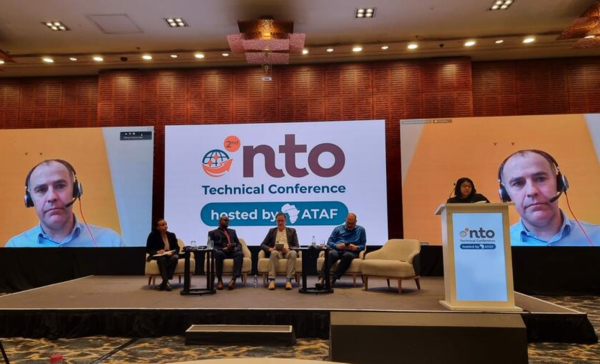
09/14/2023 Under the theme “Digitalisation of Tax Administrations and Contemporary Issues”, the conference featured a hybrid format with more than 150 in-person attendees and over 200 virtual participants.   Tax officers and experts from more than 180 tax authorities worldwide gathered in Cape Town, South Africa, from 5 to 7 September, 2023, for the 2nd Network of Tax Organisations (NTO) Technical Conference. This international event, hosted by the African Tax Administration Forum (ATAF) and organised by the Network of Tax Organisations, was held under the theme “Digitalisation of Tax Administrations and Contemporary Issues.” The conference marked a significant milestone in the global tax landscape, featuring a hybrid format with over 150 in-person attendees and more than 200 virtual participants. Representatives from international organisations, the academia, tax leaders, fiscal policy experts, government revenue officers, and IT and digitalisation specialists engaged in extensive technical discussions, sharing insights and experiences from their diverse global perspectives, and based on their daily work. Participants and engagement in the NTO Conference © GIZ    Throughout the three-day event, attendees participated in various formats, including plenary and breakout sessions, presentations, open discussions, and interactive Q&A sessions with the virtual audience. Valuable conversations also continued during informal moments, such as coffee breaks and corridor discussions, fostering even more opportunities for knowledge exchange. Highlights of the conference included in-depth discussions on: Digital Transformation of Tax Administration: The conference’s discussions focused on leadership, strategic vision, tools for measuring progress, and successful digitalisation strategies through well-defined procurement and change management plans. Collaboration among NTO members was highlighted as a key driver for accelerating digitalisation. Tax Compliance and Enforcement Technology: Technology’s transformative role in enhancing efficiency and empowerment in tax compliance took the spotlight, as well as the positive impact of the electronic invoice system. Emphasis was placed on data integrity and data science. Emerging Technologies: Attendees explored the potential of new technologies, including blockchain and artificial intelligence, for improving detection of non-compliance and data management and analytics. There was also a strong emphasis on the importance of data quality and digital literacy within tax authorities. SARS Commissioner Edward Kieswetter addressing the opening of the NTO Conference © GIZ   The NTO welcomes a new member The conference saw the Network of Tax Organisations expand its reach and expertise as it welcomed the Study Group on Asia-Pacific Tax Administration and Research (SGATAR) as its newest member. This addition strengthens NTO’s commitment to enhancing the performance of tax administrations worldwide. Signing ceremony by which SGATAR officially became member of the NTO © GIZ Today, the Network of Tax Organisations comprises ten regional and international tax organisations, united in their mission to create a global platform for strengthening tax systems for the well-being of people. A report on the 2nd NTO Technical Conference will be published soon. Participants will still have access to the virtual platform of the event until 07 October 2023. For further queries, please contact us at nto.conference@taxcompact.net Executive Secretaries and Directors of the ten NTO member organisations and some keynote speakers at the NTO Conference © GIZ

Global tax experts convene in Cape Town to drive Digitalisation in Tax Administration Read More »

Translate »